5 Warning Signs of Early Gut Disease Hiding in Your Dog's Poop
Plus the one change that helps keep a dog's gut in balance for good.
Most owners scoop it into a bag and never look twice. But a veterinarian explains how these five clues show up weeks, sometimes months, before a diagnosis like colitis.

Updated June 2026

A few years into my time in veterinary clinics, a woman named Karen brought in her 6-year-old Labrador, Bruno. He'd stopped finishing his food, his coat had gone dull, and that morning there'd been blood.
I asked her the question I always ask: how long has his stool looked off?
She thought about it. "A couple months, I guess? It got soft. Then kind of… slimy. And honestly, the smell got bad. But he was still running around, so I figured it was something he ate."
Here's the part that still bothers me. Every single warning sign had been sitting in Karen's backyard for two months. Bruno's body had been raising the alarm twice a day, in plain sight. And like almost every loving owner I've met, she scooped it into a bag and never looked twice. By the time it was obvious enough to worry her, the soft stool had a name: chronic colitis, inflammation of the large intestine that, once it sets in, you manage for the rest of the dog's life.
It wasn't Karen's fault. Nobody teaches you to read your dog's poop. So that's what this is.
Before you scoop up tomorrow morning and look away, here are the five signs I now beg every dog owner to watch for. Be honest as you read. You've probably seen at least one this week.
Heads up: a couple of the sections below include realistic images of dog stool so you can compare against your own dog's. They're clinical, not graphic.
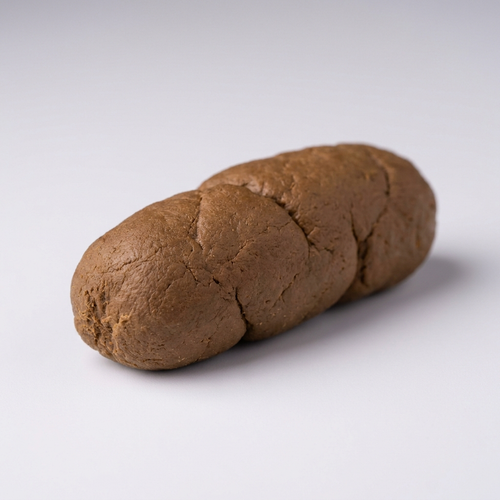
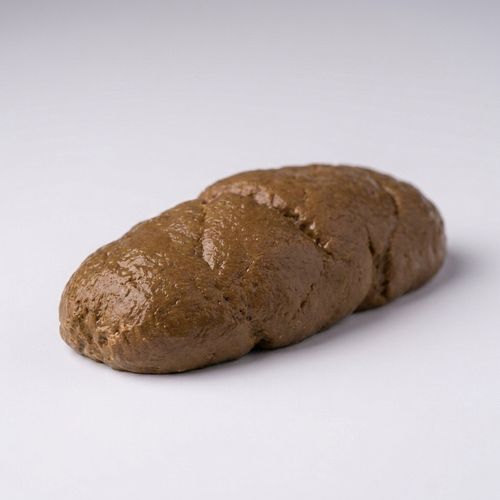
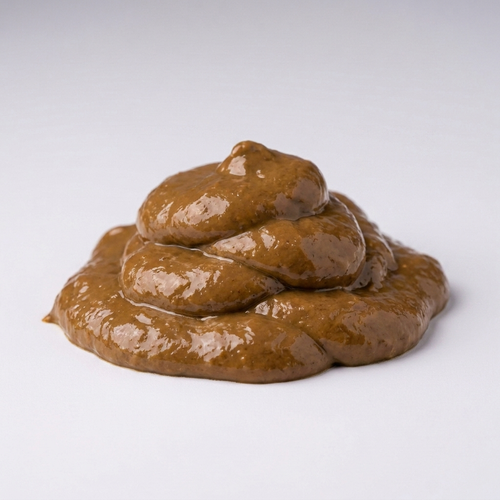
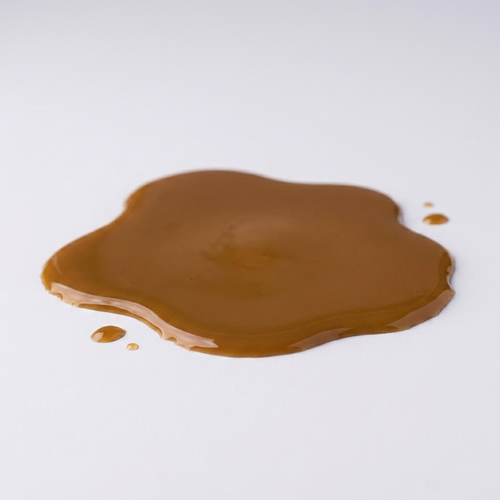
1. It won't hold its shape
A healthy stool is firm and log-shaped, and you can pick it up cleanly because it holds together. The first sign of trouble is when that breaks down: soft "soft-serve," a pudding-like blob, or a puddle. Most owners call it "a sensitive stomach." But a stool that can't hold its shape means the large intestine isn't reabsorbing water properly, one of the first things to fail when the gut lining gets inflamed.
One soft poop after a new treat is normal. Soft poop that keeps coming back, week after week, is the gut waving a flag.
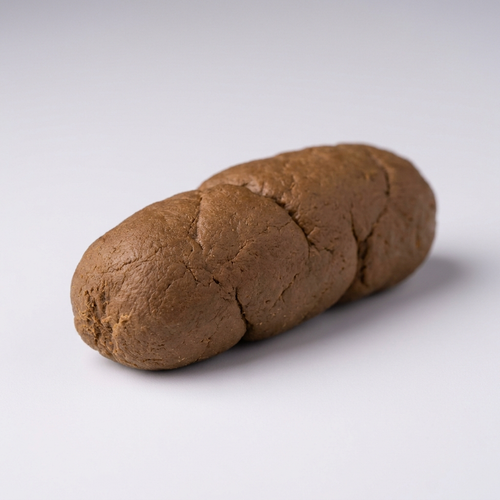
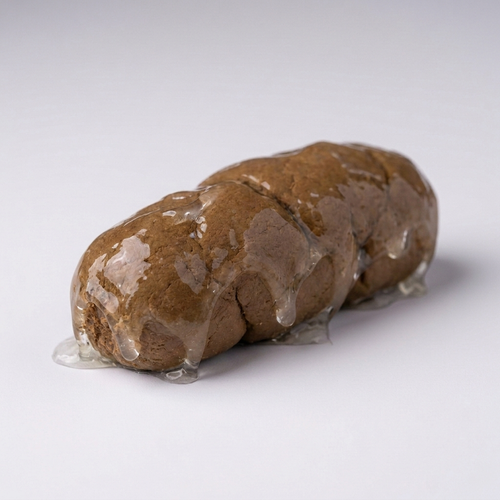
2. A slimy, jelly-like coating
This is the one almost nobody knows to look for, and it's one of the loudest. A clear or yellowish mucus, a slick jelly-like film on the stool or little globs of slime, is the intestinal lining producing extra mucus to shield itself from inflammation. In a healthy gut, you don't see it. When you do, the gut wall is irritated and trying to protect itself.
Mucus showing up regularly is one of the most direct early signals of colitis there is.

3. The color is off
Chocolate-brown is the color you want. Watch the shifts: black or tarry can mean digested blood from higher up; streaks of bright red are fresh blood from an inflamed lower gut; greasy, pale, or gray means fat isn't being absorbed. One odd-colored poop can be something they ate. A recurring change is digestion itself breaking down.
If you ever see blood (red streaks or black, tarry stool), call your vet. That's not a wait-and-see sign.

4. Straining, urgency, or accidents
A balanced gut means one or two easy, regular trips a day. The red flags: straining like they can't finish, that desperate "I need OUT, NOW" urgency, going far more often than usual, or a house-trained dog suddenly having accidents. An inflamed large intestine fires a constant false "go" signal. They physically can't hold it. Owners think it's a behavior problem. It's a gut problem wearing a behavior costume.
Sudden accidents in a trained dog are far more often a gut issue than a discipline one.

5. The smell that clears the room
Dog gas is normal. A sudden jump in eye-watering, room-clearing gas and foul stool is not. That smell is the byproduct of the wrong bacteria fermenting food in the gut. When the bad bacteria outnumber the good, digestion becomes rot instead of absorption, and you smell the difference.
The nose knows before the chart does. A new, worse smell is a real signal.
Any one of these alone? Probably a bad treat. But two or more, week after week? That isn't your dog being "sensitive." That's a gut whose bacterial balance has tipped. Left alone, that's the on-ramp to the chronic colitis that named Bruno's diagnosis.
So let's talk about why it tips, because once you understand the cause, the fix is obvious.
The real culprit: a gut that's lost its balance
Inside your dog's gut live trillions of bacteria. In a healthy dog, the good bacteria dominate: breaking food down, pulling out nutrients, keeping the gut lining calm and sealed.
That balance is fragile. A round of antibiotics, a sudden food change, stress (a move, boarding, a new puppy), or simply age can knock it sideways. The good bacteria thin out; the bad bacteria take over. Vets call it dysbiosis, an out-of-balance gut. And it's exactly what produces all five signs above:
- bad bacteria inflame the lining → mucus and shapeless stool
- inflammation triggers urgency → straining and accidents
- the wrong bacteria ferment food → the smell
- the inflamed lining seeps → color changes and blood
One root problem, five faces. And here's what owners get backwards: you can't fix a bacterial problem with a bland diet alone. Chicken and rice settles a stomach for a day, but it doesn't rebuild the good bacteria that lost the war. Stop, and the signs return. To turn it around, the gut needs reinforcements: a fresh supply of good bacteria, every day, faster than the bad ones return. That is the entire job of a real probiotic.
This is where most owners reach for the cheapest tub on the shelf, and waste their money. After years of watching products fail my patients, I learned that a probiotic only helps if it clears four bars. Most don't clear even one.
- Enough live bacteria, and the right strains. A couple of weak strains at a low count get wiped out by stomach acid before they ever reach the gut. You want several clinically studied strains measured in the billions of CFU, not a token sprinkle.
- Prebiotic fiber to feed them. Live bacteria that arrive with no food source wash straight through. Without a prebiotic like inulin, you're paying for bacteria that never take hold.
- No fillers or common allergens. The cheap tubs are padded with chicken, soy, corn, and dairy, the exact ingredients a sensitive gut reacts to. You cannot calm a gut while feeding it irritants.
- Something your dog will actually eat. The best formula on earth does nothing if it sits in the bowl. A neutral powder you sprinkle on food beats a pill you wrestle over every night.
For years I would scribble those four things on a notepad and send owners off to the pet store to figure it out on their own. Most came back more confused than when they left. So eventually I started keeping a short list of the products that genuinely meet all four.
The one I point most owners to now is a powder called Pawbiotics Gut Rescue. Let me be honest with you: it isn't magic, and nothing is. But it's one of the few I've found that checks every box on that list. Five clinically studied strains at five billion live CFU, a prebiotic blend of inulin and pumpkin to actually feed them, no chicken, soy, corn, dairy, or fillers, and it comes as an unscented powder most dogs don't even notice on top of dinner. It's made in the USA, in the same kind of cGMP facility that human supplements come from.
What I appreciate about it is as much what it leaves out as what it puts in. No chicken, beef, or dairy, the same proteins a touchy gut tends to react to. And unlike swapping foods every few weeks hoping something sticks, you're rebuilding the bacteria underneath the problem, which is the part a diet change alone never reaches.
See the full ingredient label →
"I spent eight months and a small fortune switching Maple's food, convinced it was a diet thing. The soft stools, the gas, the 2 a.m. licking. My sister finally talked me into trying a probiotic instead, and honestly I almost didn't, because I'd tried a cheap one before and nothing happened. By about week two her poops were firm again, and the gas that used to clear our living room is basically gone. I just wish I'd started with her gut instead of her bowl."
See current pricing and reviews →
Here's what I tell every owner, because the wrong expectations are the number one reason people quit too early. Give it two to four weeks. Most owners notice firmer, better-formed stools and a real drop in gas within the first couple of weeks, but a gut that's been out of balance for months takes time to rebuild, so don't judge it on day three. If your dog has a very sensitive stomach, start with a smaller amount for the first few days and then work up to the full scoop. And mix it into wet or moist food at first so it disappears completely.
It will not undo a serious medical problem, and it isn't meant to. If you're seeing blood, sudden weight loss, or a dog who is clearly unwell, that's a phone call to your vet today, not a supplement. What a daily probiotic does is the quiet, unglamorous work underneath all of it: keeping the good bacteria in the majority so the gut can hold its own.
I think about Bruno more than I would like to admit. Not because his story is rare, but because it is so ordinary. The signs sat in plain sight for two months, and the simplest version of helping him, supporting his gut before the damage set in, would have cost Karen a few minutes a day. Instead she spent the next several years managing a condition that never fully went away.
You are already holding your dog's health report twice a day. The only real question is whether you read it, and whether you do something small about it now, while it is still small.
A quick reminder: no supplement replaces your veterinarian. If you see blood or your dog is in distress, call them today. But for the daily work of keeping a dog's gut in balance, firmer stools, less gas, and a calmer belly, supporting the good bacteria every day is one of the simplest things you can start tonight.
If even two of those signs sounded like your dog, it's worth a closer look. See exactly how Gut Rescue works, what's in it, and what other owners noticed in their first few weeks.
Advertisement. These statements have not been evaluated by the FDA. This product is not intended to diagnose, treat, cure, or prevent any disease.